For many younger Australians, the answer feels obvious.
Prices are high. Deposits take years to save. Mortgage repayments are daunting. And every headline seems to reinforce the same message:
Property is out of reach.
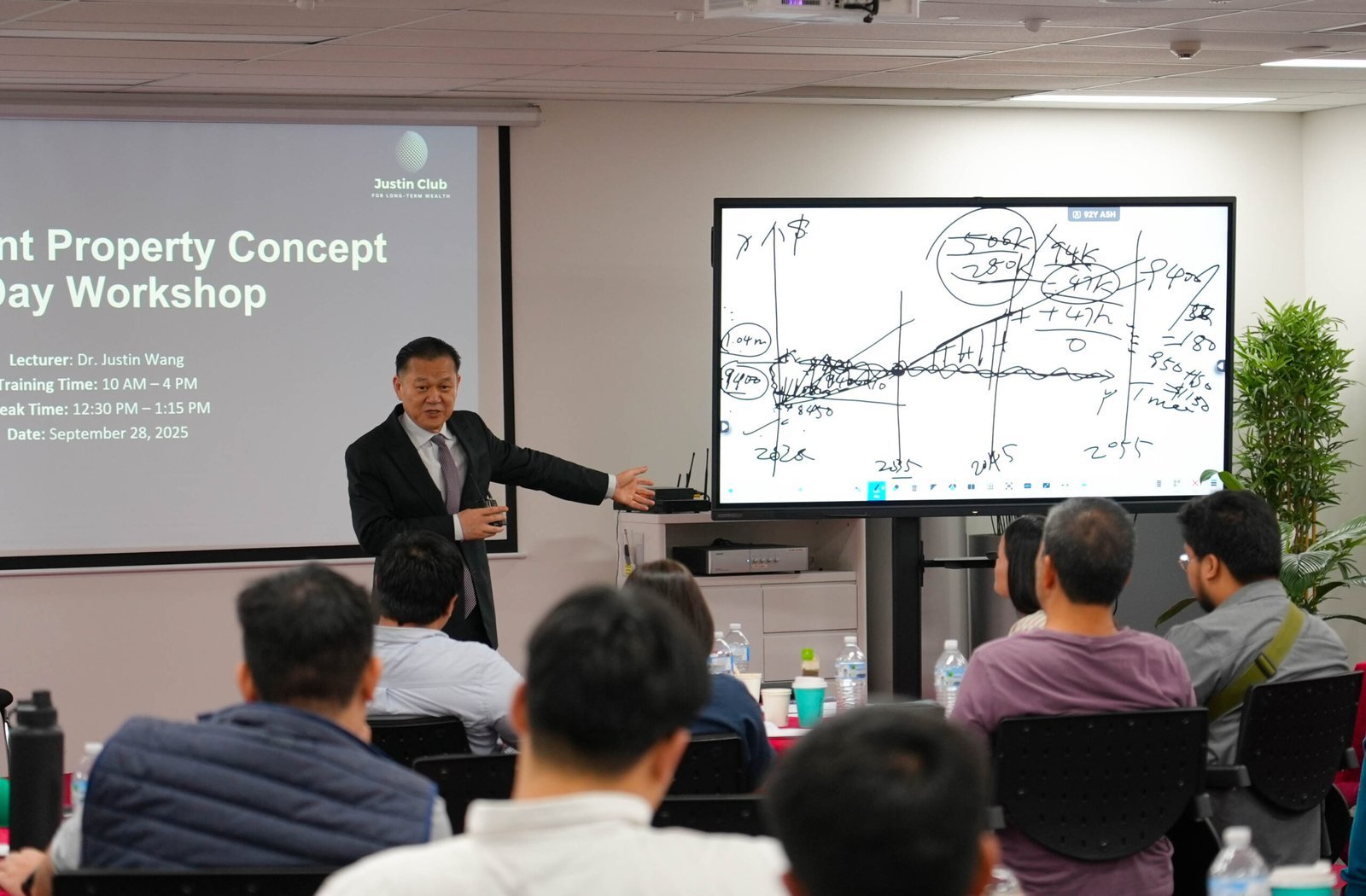
In this week’s Justin Club webinar, PIA Managing Director Justin Wang tackled that belief directly.
His message was not that affordability pressures are imaginary. In fact, he acknowledged them head-on. But his core argument was this:
The biggest mistake younger buyers make is assuming that because property feels difficult, it must therefore be impossible.
This article breaks down the key ideas from the session — and why Justin believes the real question is not whether property is affordable, but how people need to think differently in order to enter the market.
Watch the full webinar below
1. Affordability Is Real — But So Is the Cost of Waiting
Justin began by acknowledging what most younger buyers already know:
Saving a deposit is hard. Servicing a mortgage is hard. And in Sydney especially, the numbers can feel overwhelming.
That reality is what causes many people to step back and conclude that home ownership is no longer realistic.
But Justin’s point was that this conclusion often ignores the other side of the equation:
What happens if you never buy?
Rent doesn’t stay still. Property prices don’t stay still. And the financial pressure people are trying to avoid today does not disappear — it often just returns later in another form.
His argument was simple:
Avoiding mortgage pressure now can mean accepting far greater rent pressure later.
That shift in thinking is central to the webinar. Rather than asking, “Is buying hard?”, Justin asks a more important long-term question:
What is the cost of not owning an asset in a market like Sydney over 10, 20 or 30 years?
2. Property Has Always Felt Expensive
One of the most useful ideas from the session was Justin’s observation that in almost every era, people have believed Sydney property was already “too expensive.”
He reflected on arriving in Australia in 1993 and hearing exactly the same sentiment:
- property was too expensive
- rent was too expensive
- it was better to wait
- buying felt unrealistic
And yet, with hindsight, those prices now look modest compared to today.
That does not mean the market is easy now. But it does highlight an important pattern:
Property often feels unaffordable in the present, but looks cheap in hindsight.
This is where many buyers get stuck. They compare today’s prices with the past and feel they’ve missed their chance.
Justin’s view is that this is the wrong comparison.
The more relevant comparison is not:
“How cheap was property 20 years ago?”
It is:
What happens if I still don’t own property 20 years from now?”
3. Property Is Not Just About Housing — It’s About Future Financial Position
A major theme of the webinar was that owning property should not be viewed purely as an accommodation decision.
Justin framed it as a much bigger financial question.
In his view, for ordinary wage earners in Australia, one of the biggest long-term differences between people who retire comfortably and those who struggle is whether they bought property early enough — and whether they held onto it.
That is why he repeatedly returned to this idea:
Buying property is not just about where you live now. It is about where you will stand financially later.
This is an important distinction, especially for younger buyers.
Many people think of a first purchase as needing to be:
- their dream home
- in their ideal suburb
- perfectly suited to their lifestyle today
Justin challenges that mindset directly.
He argues that the first property should be viewed less as a lifestyle trophy and more as a strategic foothold.
That shift — from buying for image to buying for position — is one of the most valuable ideas in the session.
4. The Biggest Mistake: Thinking You Must Buy Your Ideal Home First
According to Justin, one of the biggest errors younger buyers make is assuming their first purchase must match where and how they want to live.
That assumption can make buying feel impossible.
If someone is trying to buy in their dream suburb, on a single income, with no flexibility around property type or strategy, then yes — affordability may look hopeless.
But Justin’s point is that this is too narrow a way to think.
Instead, he encourages buyers to separate two questions:
- Where do I want to live right now?
- What property can I afford to own as an asset?
Those are not always the same thing.
And once buyers accept that, more options open up.
This leads into one of the webinar’s core strategic concepts:
You do not always need to live in the first property you buy.
5. A Different Model: Buy to Own, Rent to Live
One of the strongest ideas in the webinar was Justin’s explanation of what he calls the buy-and-rent model.
The principle is simple:
- buy a property you can afford as an asset
- rent it out
- continue living in a way that works for your current budget
That may mean:
- staying at home longer
- sharing accommodation
- renting in a more convenient suburb while owning elsewhere
- choosing investment logic before lifestyle logic
Justin’s argument is that this can dramatically change the affordability equation.
Instead of trying to fund a property entirely from your own after-tax income while also living in it, the property can be supported by:
- tenant rent
- tax deductions where applicable
- future equity growth
- your own contribution at a lower out-of-pocket level
Whether or not someone adopts this exact model, the broader insight is powerful:
Affordability can look very different once you stop assuming you must buy a home exactly the way you imagined it.
6. Family Support Can Be a Strategy — Not a Shortcut
Another major theme in the webinar was Justin’s view that younger buyers should think more openly about using family support to enter the market earlier.
He gave examples such as:
- borrowing deposit support from parents
- refinancing family property where appropriate
- pooling resources with siblings
- using legal structures and clear repayment plans to make shared entry possible
His broader point was not simply “ask your parents for money.”
It was that many families already hold substantial housing equity built over decades — and that helping the next generation access property sooner may be one of the most valuable ways that equity can be used.
In other words:
Family support is not always about gifting wealth. It can also be about improving timing.
And in a market where waiting can be costly, timing matters enormously.
7. Younger Buyers Often Underestimate Their Real Options
Justin argued that many people underestimate what is actually possible because they only think about one version of buying:
- alone
- with a full 20% deposit
- buying their ideal home
- servicing the loan entirely by themselves
- with no external support or flexibility
Under that model, of course the numbers can look impossible.
But once buyers consider alternatives — such as co-buying, guarantor support, first-home buyer schemes, buying in different locations, or using rental income strategically — the picture can change.
That does not mean every person is ready to buy immediately.
It does mean that many people may have more pathways than they realise.
This was one of the clearest messages of the webinar:
The market may be difficult, but difficulty and impossibility are not the same thing.
8. Why Justin Believes Time Still Matters More Than Comfort
Throughout the session, Justin returned to a long-term perspective.
His argument is that the earlier someone secures an asset in Sydney residential property, the more time they give themselves to benefit from:
- capital growth
- rental growth
- inflation working in their favour
- debt becoming smaller in real terms over time
- future refinancing options
From that perspective, the goal is not perfect comfort at the start.
It is strategic entry.
And that is why he believes many younger buyers make a mistake when they delay action in search of a more comfortable or ideal purchase later.
Because in many cases, later means:
- a higher purchase price
- a bigger deposit hurdle
- higher rent in the meantime
- less time for growth to compound
His position is clear:
The first step matters more than the perfect step.
9. The Bigger Shift: From “Can’t Buy” to “How Could I Buy?”
The most valuable part of the webinar was not any one tactic.
It was the mindset shift underneath it.
Justin is ultimately encouraging younger buyers to stop framing the issue as a dead end.
Instead of saying:
“I can’t buy.”
He wants people to start asking:
“What would need to change for me to buy?”
That could mean:
- changing the suburb
- changing the property type
- changing the ownership structure
- changing the timeline
- changing the expectation of what a first purchase should be
Once that question changes, strategy becomes possible.
And that is the deeper point of the webinar.
Not that buying is easy.
But that with the right thinking, structure, and flexibility, it may be far more achievable than people assume.
Final Thought
The affordability conversation often ends too early.
It stops at the problem.
Justin’s webinar pushes the conversation one step further — into strategy.
Because while property may be difficult for younger buyers today, the long-term cost of opting out altogether may be even greater.
For those willing to think differently, act earlier, and separate lifestyle from long-term financial positioning, the path into the market may still exist.
The challenge is not just affordability.
It is clarity.
Want More Investor Insights Like This?
Justin shares practical property thinking, live webinars, and long-term wealth strategies regularly through Justin Club.
You’ll get access to:
- exclusive investor webinars
- market commentary and strategy breakdowns
- practical Q&A sessions
- ongoing education for Sydney investors