
Introduction
Selling property in Sydney is often seen as a simple sequence — list the property, run inspections, accept an offer. But in reality, the process is far more complex, and the difference between an average result and a strong one often comes down to decisions made well before the property even hits the market.
Timing, pricing, presentation, and buyer psychology all play a role — and in today’s environment, buyers are more informed, more selective, and quicker to dismiss properties that feel misaligned.
This is where many sellers get caught out.
The real issue isn’t just the market — it’s how a property is positioned within it.
In this article, we break down the key areas where sellers often lose value without realising it — and how a more structured, strategic approach can help you navigate the process with clarity and confidence.
1. The Market Isn’t “Good” or “Bad” — It’s Selective
One of the most common questions sellers ask is: “Is now a good time to sell?”
But this framing is often misleading.
What most sellers don’t realise is that the Sydney market is rarely uniform. It doesn’t move in one direction for all properties. Instead, it behaves selectively — rewarding well-positioned properties and overlooking those that aren’t aligned with buyer expectations.
This is where many sellers get caught out.
Over the past 12 months, Sydney has remained active — but also more discerning. Buyers are comparing more, analysing more, and making decisions based on value rather than urgency.
That means:
- Overpriced properties are quickly ignored
- Poorly presented homes struggle to gain traction
- Strong listings generate early competition
The real issue isn’t whether the market is “hot” — it’s whether your property is positioned correctly within current conditions.
A better question to ask is:
“How will my property compete in today’s market?”
Because in a selective environment, clarity and positioning matter more than broad market sentiment.
2. Timing the Market Matters Less Than Timing Your Strategy
Many sellers delay decisions waiting for the “perfect” market conditions — a peak in prices, lower interest rates, or stronger buyer demand.
But what most sellers don’t realise is that perfect timing rarely exists.
Strong markets often bring more competition from other sellers. Softer markets may reduce competition but also shift buyer behaviour. Trying to predict the exact peak is difficult — even for experienced professionals.
This is where thinking needs to shift.
The real issue isn’t just market timing — it’s strategic timing.
Selling should align with:
- Your financial objectives
- Your next move (upgrade, downsizing, reinvestment)
- Your property’s current position in the market
When those elements align, the decision becomes clearer — regardless of headlines.
Another common trap is “testing the market” — listing without full commitment.
This often leads to:
- Overpricing
- Weak early momentum
- Extended time on market
- Reduced negotiating power
In today’s environment, buyers respond to confidence and clarity.
If you decide to sell, it should feel deliberate — not tentative.
Because a structured approach consistently outperforms reactive decision-making.
3. Pricing Isn’t About Maximising — It’s About Positioning
If there is one factor that consistently determines the success of a sale, it’s pricing.
Not marketing. Not method. Not even timing alone.
Pricing.
This is where many sellers get caught out.
The natural instinct is to aim high — to “leave room to negotiate” or test buyer appetite. But the market doesn’t work that way.
Buyers today are highly informed. They have access to comparable sales, suburb data, and historical pricing. They form expectations before they even attend an inspection.
What most sellers don’t realise is:
The first two to three weeks of a campaign are critical.
During this period:
- Buyer attention is highest
- Enquiry levels peak
- Competition is created (or lost)
Overpricing at this stage can:
- Reduce enquiry
- Limit inspections
- Stall momentum
- Lead to visible price reductions
And once a property feels stale, leverage weakens.
The goal of pricing isn’t to achieve the highest number on paper.
It’s to create the conditions where buyers compete.
Because competition — not optimism — is what drives strong results.
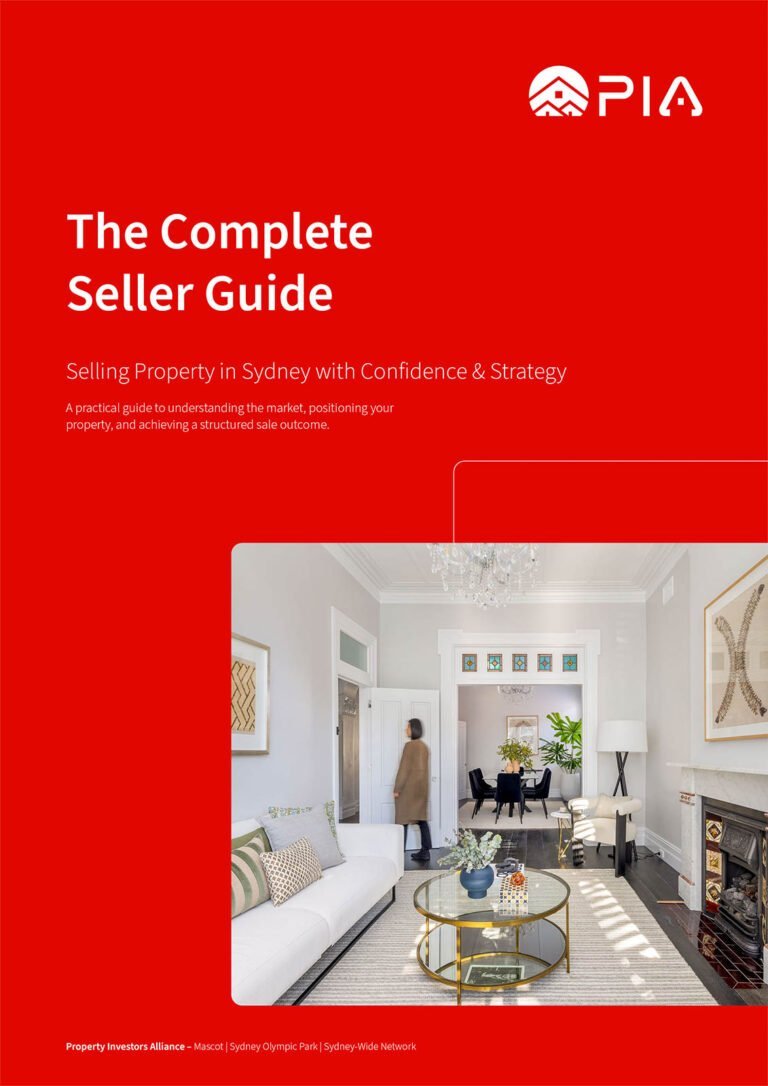
For a more structured breakdown, refer to our Complete Sellers Guide below.
4. Presentation Isn’t Cosmetic — It’s Strategic
Many sellers assume that presentation is about aesthetics — making the property “look nice.”
But in reality, presentation is about buyer perception.
This is where many sellers underestimate its impact.
Buyers don’t just evaluate what they see — they interpret what it means:
- A well-maintained home signals care
- A clean, uncluttered space feels easier to move into
- A fresh, neutral environment allows emotional connection
The real issue isn’t whether a property is perfect — it’s whether it feels ready.
Small improvements often have the greatest impact:
- Fresh paint
- Minor repairs
- Decluttering
- Improved lighting
- Street appeal
These changes don’t just improve appearance — they reduce buyer objections.
And fewer objections mean stronger offers.
What most sellers don’t realise is that buyers price in perceived effort.
If a property feels like work, they discount.
If it feels complete, they compete.
Presentation, when done strategically, becomes a tool — not an expense.
5. The Selling Method Should Follow Strategy — Not Preference
Auction or private treaty?
It’s one of the first decisions sellers are asked to make — and often one of the most misunderstood.
This is where many sellers get caught out.
They choose a method based on:
- What worked for a neighbour
- Personal comfort
- General market perception
But the reality is that no single method is always “best.”
Each method influences:
- Buyer behaviour
- Perceived value
- Negotiation dynamics
For example:
- Auctions can create urgency and competition in high-demand environments
- Private treaty offers flexibility in more price-sensitive markets
- Off-market strategies may suit privacy or targeted buyer groups
The real issue isn’t the method itself — it’s whether it aligns with:
- Your property type
- Buyer demographic
- Current market conditions
- Your risk tolerance
A method is simply a tool.
Used correctly, it creates leverage.
Used incorrectly, it can reduce it.
The strongest results come when strategy drives the method — not the other way around.
Conclusion
Selling property is one of the most significant financial decisions many people make — yet it’s often approached with assumptions rather than structure.
The reality is that strong outcomes are rarely accidental.
They come from:
- Accurate positioning
- Strategic pricing
- Disciplined preparation
- Structured marketing
- Controlled negotiation
The reason many sellers fall short isn’t because the market is difficult — it’s because the process is misunderstood.
And when key decisions are made without clarity, value is often left on the table.
The difference comes down to approach.
When you treat selling as a structured process — rather than a one-off event — you move from uncertainty to control.
And in a market like Sydney, that shift makes all the difference.
If you want a clear, structured understanding of the Sydney market, selling methods, pricing strategy, and how to position your property for the strongest possible result: